

The Science of Gallstones: How They Form and Why They Block the Bile Duct
The human digestive system relies on a perfectly timed sequence of chemical reactions to break down the food you eat. At the center of this complex process is bile, a fluid produced by the liver that plays a major role in digesting fats. However, when the delicate chemical balance of this fluid is disrupted, solid particles can form. These hard deposits are known as gallstones.
While many people carry gallstones without ever knowing it, severe complications arise when these stones travel out of their original resting place and lodge themselves inside the bile duct.
Understanding the difference between the gallbladder and the bile duct, along with how these stones move, is crucial for recognizing the symptoms of a blockage early. At Jyoti Hospital, our gastroenterology team works daily to diagnose and treat these conditions before they progress into major medical emergencies.
The Role of Bile in Daily Digestion
To understand how stones form, it helps to look at what bile actually does. Your liver constantly creates this bitter, yellowish-green fluid to help dissolve the fats you consume. Without a steady supply of bile, your body would struggle to absorb essential fat-soluble vitamins and nutrients from your meals.
How Gallstones Form inside the Gallbladder
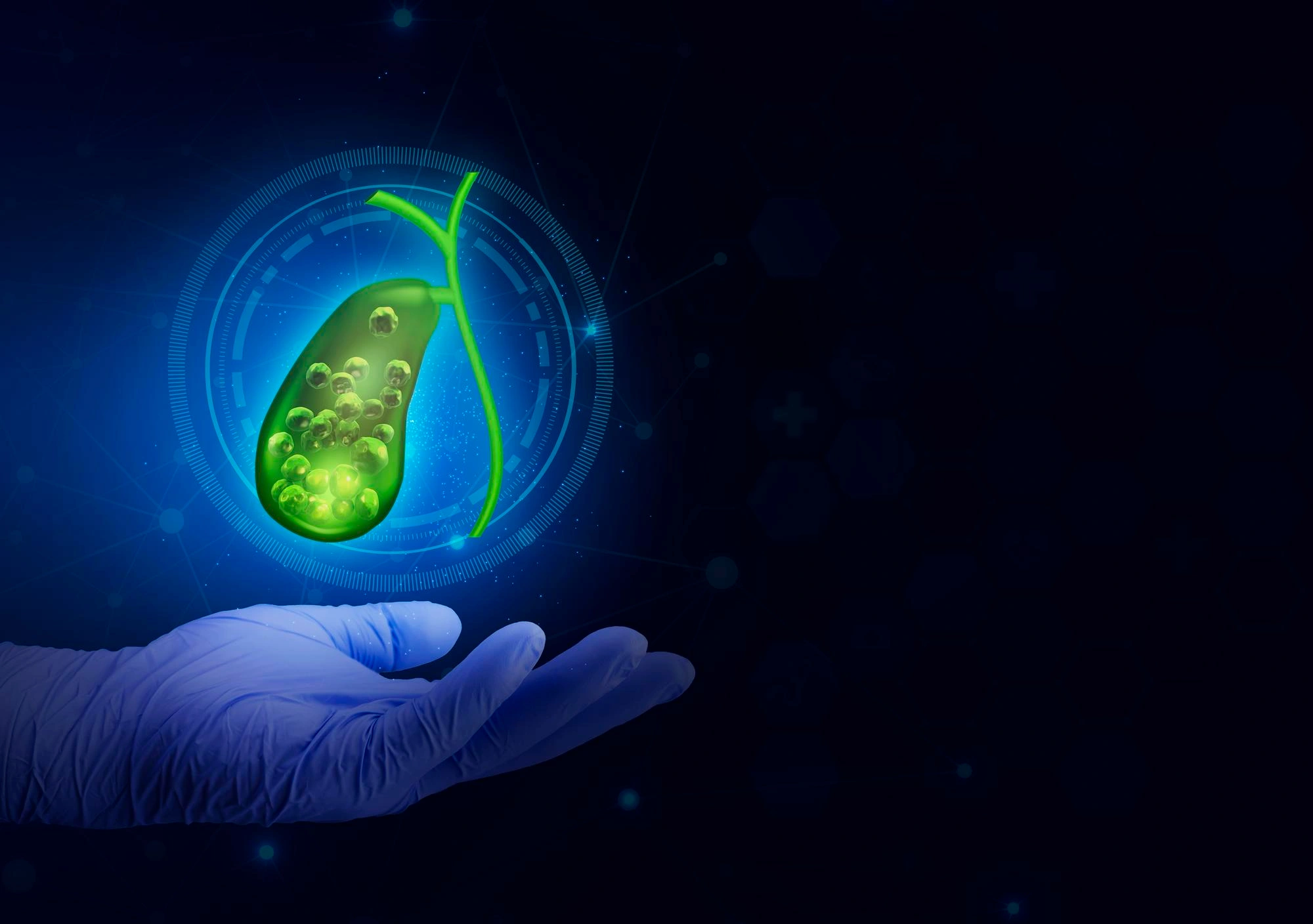
The gallbladder is a small, pear-shaped organ located just under your liver. Its primary responsibility is to store and concentrate the bile that your liver continuously produces. When you eat a meal, especially one high in fats, the gallbladder contracts to push this concentrated fluid through the bile ducts and directly into the small intestine.
Bile itself is a complex mixture containing water, cholesterol, fats, bile salts, and bilirubin, which is a waste product derived from old red blood cells. Under normal circumstances, all of these components remain completely dissolved in a liquid state.
Saturated Fluids and Stagnant Bile
If the gallbladder cannot empty its contents effectively, or if the liver secretes too much cholesterol or bilirubin, the fluid becomes highly saturated. When bile remains stagnant and saturated for too long, the excess cholesterol or bile salts begin to form tiny crystals. Over time, these crystals cluster together and slowly harden into solid stones.
The Path from the Gallbladder to the Bile Duct
A common point of confusion for many patients is the difference between having a stone in the gallbladder versus a stone in the bile duct.
As our medical experts emphasize, the vast majority of stones originate directly inside the gallbladder. The real trouble starts when the gallbladder contracts to expel bile and accidentally pushes a stone out along with the fluid.
Secondary vs. Primary Stones
When bile inside the gallbladder stalls, it becomes heavily saturated, leading to crystal formation. These small crystals eventually clump together into distinct gallstones. During normal digestion, the gallbladder squeezes to release fluid, but this force can accidentally launch a stone forward into the exit tubes, causing a direct migration into the common bile duct.
Statistically, about ninety to ninety-five percent of the stones found in the common bile duct are actually secondary stones. This means they formed inside the gallbladder and traveled down into the narrow duct network. Only a small fraction, roughly five percent, are primary stones that actually develop directly within the bile duct itself, usually due to a chronic infection or structural narrowing of the duct.
The Danger Zone: Why Stones Block the Ampulla
The bile duct network acts like a plumbing system, transporting fluid from the liver and gallbladder into the duodenum, which is the first section of the small intestine. As the bile duct approaches the intestine, it meets the pancreatic duct at a small, specialized opening called the ampulla of Vater.
The Bottleneck in Your Digestion
This opening is incredibly narrow. While tiny, sand-like stones can sometimes pass through the ampulla into the intestine unnoticed, larger stones frequently get stuck. When a stone lodges itself in this specific transition zone, it acts like a tight plug in a pipe.
Because the opening is blocked, bile can no longer empty into the intestine. The fluid backs up into the bile duct, causing the pressure inside the duct network to rise rapidly. This sudden increase in pressure stretches the duct walls, triggering intense, localized pain and setting the stage for serious clinical complications.
Symptoms and Complications of a Biliary Blockage
When a gallstone completely blocks the bile duct, the body will quickly signal that something is wrong. Recognizing these symptoms early can be the difference between a routine treatment and a major medical emergency.
- Biliary Colic: This is a sudden, sharp, and intense pain located in the upper right quadrant of the abdomen. The pain often radiates to the right shoulder or back and can last anywhere from a few minutes to several hours. It typically intensifies after eating heavy or fatty meals.
- Jaundice: Because the blocked bile cannot reach the intestine, a pigment called bilirubin builds up in the bloodstream. This causes a distinct yellowing of the skin and the whites of the eyes, dark tea-colored urine, and pale, clay-colored stools.
- Acute Cholangitis: Stagnant bile is a breeding ground for bacteria. If a bacterial infection develops behind the blockage, it can lead to high fever, chills, and severe abdominal pain. This is a life-threatening condition that requires immediate medical intervention.
- Gallstone Pancreatitis: Because the bile duct and pancreatic duct share a common exit at the ampulla, a stone blocking this opening can also prevent pancreatic enzymes from escaping. These enzymes back up, causing severe, painful inflammation of the pancreas.
Advanced Treatment Options at Jyoti Hospital
At Jyoti Hospital, we utilize modern diagnostic and therapeutic techniques to safely clear biliary obstructions and restore healthy digestion.
ERCP (Endoscopic Retrograde Cholangiopancreatography)
For stones that have moved into the bile duct, ERCP is the gold standard intervention. This specialized procedure combines endoscopy and X-ray imaging. A thin, flexible scope is passed through the mouth, down the esophagus, and into the small intestine to reach the ampulla of Vater. The gastroenterologist can visually locate the stuck stone, make a tiny incision in the opening to widen it, and use specialized baskets or balloons to safely extract the stone, clearing the blockage safely without needing open surgery.
Laparoscopic Cholecystectomy
Once the bile duct is cleared, the original source of the problem still remains: the gallbladder containing the rest of the stones. To prevent future blockages and severe painful episodes, our surgical team typically recommends a laparoscopic cholecystectomy. This is a minimally invasive surgical procedure performed through tiny incisions to safely remove the gallbladder. The human body can function perfectly fine without a gallbladder, as the liver will simply divert bile directly into the small intestine.
Take Control of Your Digestive Health with Jyoti Hospital
Abdominal pain should never be ignored or chalked up to simple indigestion. If you or a loved one are experiencing persistent pain in the upper right abdomen, unusual nausea after meals, or any signs of jaundice, it is crucial to seek professional medical evaluation immediately.
Why North Chennai Trusts Jyoti Hospital
Located on Thiruvottiyur High Road in Old Washermenpet, Jyoti Hospital stands as a premier multispecialty healthcare destination with a legacy of over twenty-five years of dedicated service. Our facility features advanced diagnostic suites, cutting-edge operation theatres, and specialized intensive care units designed for optimal patient safety.
Our core strength lies in our vibrant team of highly experienced specialists and surgeons, many of whom average more than twenty-five years of clinical expertise. By combining advanced, minimally invasive technologies like ERCP and laparoscopic surgery with a personalized, compassionate approach to patient care, we ensure world-class healthcare remains highly accessible and affordable.
At Jyoti Hospital, your long-term health and absolute comfort are our topmost priorities. Contact our team today to schedule a consultation with our gastroenterology experts and ensure your digestive health is in the safest possible hands.