

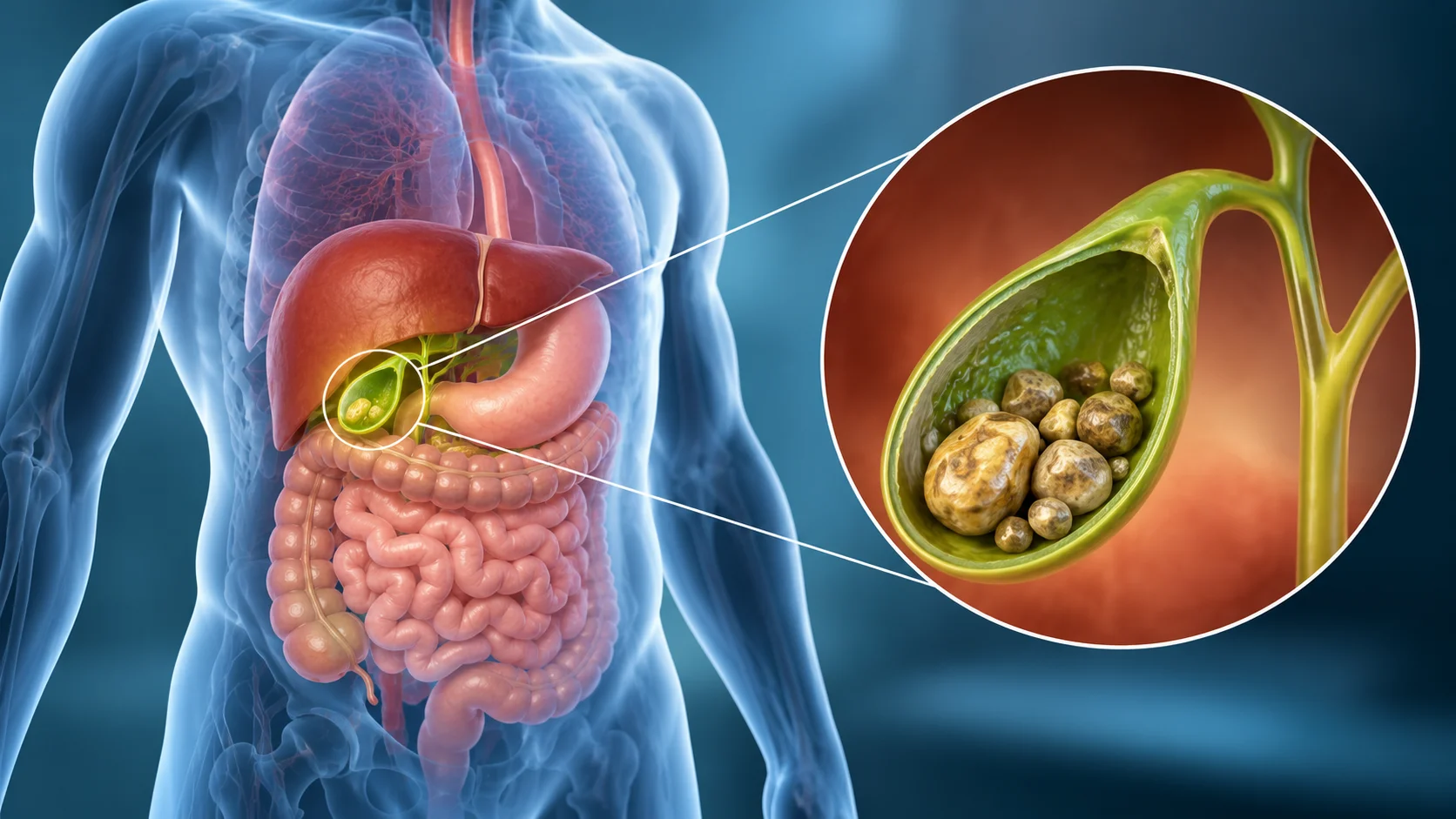
Can Gallbladder Stones Affect Your Pancreas?
Have you ever experienced a sudden sharp pain in the upper right side of your stomach immediately after a heavy, oily meal, and then had it suddenly settled down? Most people assume this is gas or acidity and let it pass without a second thought. But if this pain keeps returning and comes along with vomiting and fever, it might be your gallbladder trying to gain your attention. And in some cases, it can affect your pancreas too.
Most people don't realize that a small stone in the gallbladder can end up affecting a completely different organ. Here is how the connection between the gallbladder and pancreas works, and why it must never be ignored.
The Gallbladder and Pancreas Are More Connected Than You Think
The gallbladder and the pancreas are two separate organs, but they share one common exit route into the small intestine. Bile from the gallbladder and digestive enzymes from the pancreas both drain through a shared duct system before reaching the intestine. Under normal conditions, this works smoothly.
The trouble starts when a gallstone breaks loose from the gallbladder and gets stuck along this shared pathway. Once it blocks the duct, pressure builds on the pancreatic side as well. Digestive enzymes that are meant to activate only inside the intestine begin activating early, right inside the pancreas itself. This leads to inflammation and irritation of pancreatic tissue, a condition known as gallstone pancreatitis.
Why This Happens
- A stone moves out of the gallbladder and lodges in the shared duct
- This blocks the normal flow of both bile and pancreatic enzymes
- Pressure builds up inside the pancreatic duct
- Enzymes that should activate in the intestine start activating inside the pancreas instead
- This triggers inflammation, swelling, and in some cases, damage to pancreatic tissue
This is not a rare coincidence. Gallstones are one of the most common causes of acute pancreatitis, and in India, they are responsible for a significant share of pancreatitis hospital admissions.
A Few Facts Worth Knowing
- Gallstones account for roughly 30 to 65 percent of all acute pancreatitis cases in India
- Not everyone with gallstones develops pancreatitis. Studies show it occurs in a meaningful minority of gallstone patients, which is why other factors like stone size and obesity also play a role.
- Smaller stones, particularly those under 5 mm, are more likely to travel and cause a blockage than larger ones
- A large proportion of pancreatitis cases linked to gallstones are found in patients who did not even know they had gallstones until the attack happened
- Around a fifth to a third of acute pancreatitis cases can turn severe, which is exactly why early diagnosis matters so much
Symptoms You Should Not Brush Aside
Gallstone pancreatitis does not always start dramatically. In many cases, it builds gradually before becoming a full-blown emergency. Watch out for:
- Sudden, intense pain in the upper abdomen, often spreading to the back
- Pain that worsens after eating, especially fatty or oily food
- Nausea and repeated vomiting
- Fever with chills
- Yellowing of the skin or eyes
- A rapid heartbeat or feeling unusually weak
If the pain is severe and does not settle within a couple of hours, this is not something to wait out at home.
Who Is More at Risk
Certain groups tend to be more prone to both gallstones and the complications that follow:
- People above 40 years of age
- Women, who are statistically more likely to develop gallstones
- People who are overweight or obese
- Those with a family history of gallstones
- People with a sedentary lifestyle or a diet high in fried and fatty food
- Individuals with underlying conditions such as diabetes or thyroid disorders
Simple Steps to Protect Your Gallbladder and Pancreas
- Maintain a healthy weight and avoid rapid weight loss, which can actually increase gallstone risk
- Cut down on deep fried and heavily oily foods
- Stay active with regular movement or exercise
- Do not skip meals for long stretches, since irregular eating patterns affect bile flow
- Get an ultrasound done if you experience recurring pain in the upper right abdomen, even if it seems mild
- Do not ignore gallstones just because they are not currently causing symptoms, especially if they are small
When to See a doctor
If you already know you have gallstones, do not treat them as something to monitor casually on your own. And if you experience sudden, severe abdominal pain along with vomiting or fever, treat it urgently rather than waiting to see if it passes.
A Small Stone Leads to a Bigger Risk
A gallstone sitting in the gallbladder may seem harmless, but because of its location, it can disrupt an entirely different organ, the pancreas. If you experience frequent stomach pain, especially after meals, get it checked at once to avoid much bigger complications down the line. Jyothi Hospital in Old Washermenpet, Chennai, offers proper guided diagnostic evaluation for gallbladder and pancreas concerns, so a small warning sign never turns into a major emergency.